
If you sell plumbing, legal advice, accounting, coaching, cleaning, IT support or any other service, your service page is doing the hardest selling job on your site. Yet most service businesses treat it as an afterthought: a short paragraph, a stock photo and a phone number buried in the footer. This guide shows you exactly how to plan services web page design from scratch, whether you build it yourself or brief a professional.
Quick answer: what web page design services include and how to approach a service page
Web page design services normally cover strategy and wireframing, visual design (layout, typography, colour, imagery), responsive build, basic on-page SEO, and often copywriting, photography and post-launch maintenance. To plan a service page, work in this order: define one offer and one audience, map the page structure around buyer questions, write the copy before the design, layer in trust elements (reviews, case studies, credentials), then place clear calls to action every screen or two. Only once that skeleton exists should you hand a brief to a designer or open a template builder.

What is actually included in services web page design?
Scope varies by provider, so confirm it in writing. A typical package includes:
- Discovery and strategy: goals, audience, competitors, conversion targets
- Information architecture: how many service pages you need and how they link
- Wireframes: the block-by-block skeleton of each page
- Visual design: branding, layout, imagery, icons, buttons
- Build: WordPress, Webflow, Shopify, Squarespace or custom code
- Responsive and accessibility checks: mobile, tablet, contrast, keyboard navigation
- On-page SEO: title tags, headings, schema, image compression, Core Web Vitals
- Content: copywriting and visuals (sometimes an add-on, so ask)
- Integrations: booking tools, CRM, quote forms, live chat, analytics
- Training and maintenance: handover, updates, backups, security
Step 1: Define one offer, one audience, one outcome
A page that tries to speak to everyone converts no one. Before any design work starts, write a single sentence in this format:
“We help [specific audience] in [location or sector] to [result] through [service], usually within [timeframe], starting at [price or price range].”
Example: “We help independent dental clinics in Manchester fill empty appointment slots through local SEO and paid search, usually within 90 days, from £950 per month.”
Decide these three things now:
- The scope: what is and is not included, so the page answers objections before they become emails.
- The primary conversion: phone call, booked consultation, quote form or instant online booking. Pick one hero action.
- One page per service: never bundle five unrelated services onto a single page. Google ranks specific pages, and visitors scan for their exact problem.
Pro tip
If you offer the same service in several towns, build one strong parent service page and then genuinely differentiated location pages. Thin duplicated location pages are a common reason service sites underperform in search.
Step 2: Research what buyers actually ask
Good service pages are built from real language, not internal jargon. Spend two hours gathering:
- The ten questions your sales team or inbox answers every week
- Google autocomplete and “People also ask” results for your service plus your city
- Phrases from your own five-star reviews (they describe the benefit better than you will)
- Competitor pages that rank on page one: note their structure, not their wording
Map a primary keyword to the page (for example “emergency electrician Bristol”), plus three or four supporting phrases used naturally in subheadings.

Step 3: Map the page structure before anything is designed
Design decisions get cheap when the structure is fixed first. A proven service page block order looks like this:
- Hero: headline stating the outcome, one supporting line, primary CTA, secondary CTA, one trust strip (ratings, years in business, accreditations)
- Problem and promise: three short lines that prove you understand the visitor’s situation
- The service explained: what you do, in plain words, with a bullet list of inclusions
- Process: three to five numbered steps showing what happens after they contact you
- Proof: reviews, logos, case study snapshot, before and after visuals
- Pricing or price guidance: from-pricing, packages or a transparent “how we quote” section
- Team or credentials: faces, licences, insurance, certifications
- FAQ: six to ten objection-handling questions
- Final CTA block: repeat the offer, add a phone number, form and service area
Sketch it on paper or in a free wireframe tool. Grey boxes with labels are enough. This is the single most valuable document you can hand to a designer.
Step 4: Write the copy first, design around it
Designers who receive “lorem ipsum” produce layouts that break the moment real words arrive. Write the copy in a document, section by section, following these rules:
- Headline = outcome, not service name. “Boiler repaired today or you pay nothing” beats “Our heating services”.
- Short paragraphs. Two to three lines maximum on mobile.
- Specifics beat adjectives. “Average response time 38 minutes” beats “fast and reliable”.
- One idea per block. If a section needs two headings, it is two sections.
- Answer the money question. Even a range builds more trust than silence.
Step 5: Layer in trust elements
Service buying is risk management. The visitor cannot inspect your work before paying, so the page must substitute proof for inspection. Use at least four of these:
- Reviews with context: name, location, service used and date. Pull live Google reviews where possible.
- Case studies: situation, action, measurable result. Even “reduced monthly energy bill by 22%” works.
- Numbers: years trading, jobs completed, clients retained, response times.
- Credentials: licences, insurance cover, professional bodies, manufacturer approvals.
- Faces: real photos of your team beat stock imagery in almost every test.
- Risk reversal: guarantees, fixed quotes, no-obligation surveys, free cancellation windows.
Place one trust element directly beside every call to action. That is where hesitation peaks. Related reading: Decoding the Basics: What is a Service Page.
Step 6: Design calls to action that match buying temperature
Not everyone is ready to buy. Offer two paths on every screen:
- Primary CTA (hot): “Book a free 20-minute call”, “Get a fixed quote”, “Call now”
- Secondary CTA (warm): “See pricing”, “Download the checklist”, “View case studies”
Design rules that reliably lift conversions:
- Repeat the primary CTA at least four times down a long page.
- Keep forms to name, contact, service needed and a free-text box. Each extra field costs completions.
- Make phone numbers tap-to-call on mobile and add a sticky mobile bar.
- State what happens next: “We reply within one working hour, no call centre.”
- Never hide the CTA behind an accordion or a slow-loading carousel.
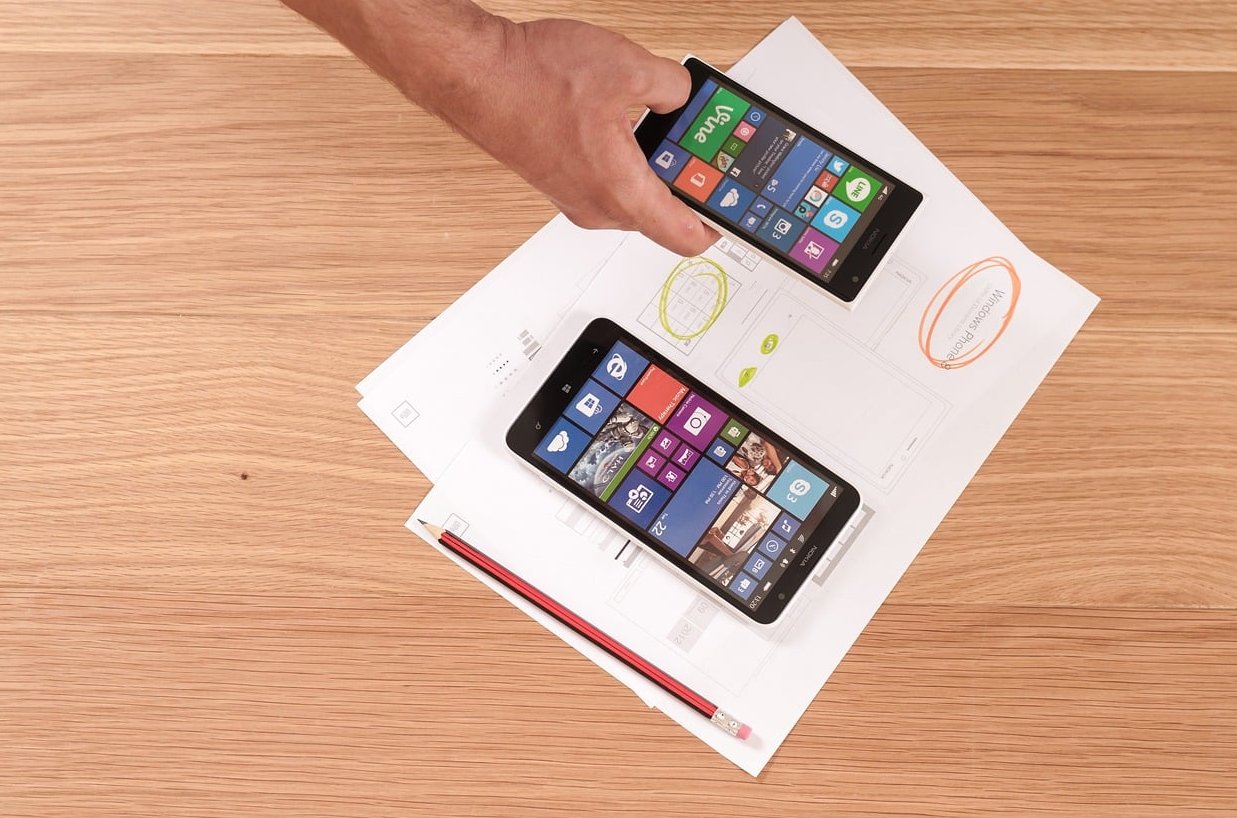
Step 7: Brief the designer properly (or brief yourself)
A clear brief typically cuts revision rounds in half. Include every item below:
| Brief section | What to supply |
|---|---|
| Objective | One measurable goal, e.g. 25 qualified quote requests per month |
| Audience | Who they are, what they fear, what they compare you to |
| Content | Final copy, images, logos, reviews, certifications |
| Structure | Your wireframe from Step 3 |
| References | Three sites you like and why, two you dislike and why |
| Technical | Platform, hosting, CRM, booking tool, analytics, accessibility level |
| Scope | Number of pages, revision rounds, who writes copy, who sources images |
| Timeline and budget | Launch date, milestone dates, budget band |
Real-world example: a service page layout that works
Here is a stripped-down layout for a fictional company, Northside Commercial Cleaning, selling office cleaning contracts:
- Hero: “Office cleaning in Leeds, from £19 per hour, insured and DBS-checked staff.” Buttons: Get a free on-site quote / See pricing. Under the buttons: “4.9 from 212 Google reviews | Fully insured | 11 years in business”.
- Problem block: three icons: unreliable cleaners, inconsistent standards, no accountability.
- What is included: bullet list covering desks, washrooms, kitchens, waste, consumables restocking, periodic deep cleans.
- Process: 1) Free site visit, 2) Fixed written quote in 48 hours, 3) Trial month, 4) Monthly quality audits with photo reports.
- Proof: two short case studies (a 40-desk agency and a dental practice) with the before situation, the change and a measurable result, plus three review cards.
- Pricing guidance: a simple three-column table (Essential, Standard, Full Facilities) with from-prices and a note on what changes the price.
- Team: photo of supervisors, DBS and insurance badges, staff training policy.
- FAQ: contract length, out-of-hours access, key handling, cover for sickness, cancellation notice.
- Closing CTA: short form (name, company, postcode, square footage, phone) plus a tap-to-call number and the service radius listed as text for local SEO.
Nothing on that page is decorative for the sake of it. Every block removes a reason to leave.
How much do web design services cost?
Prices depend on country, scope, platform and whether content is included. The bands below reflect commonly published ranges from industry pricing guides. Treat them as planning figures and always get three written quotes.
| Option | Typical cost | Best for |
|---|---|---|
| DIY website builder (Wix, Squarespace, WordPress + theme) | Roughly $0 to $60 per month, plus domain | Solo traders validating an offer |
| Freelancer, single service page or landing page | Roughly $300 to $2,000 | Adding one high-intent page to an existing site |
| Freelancer or small studio, 5 to 10 page site | Roughly $2,000 to $10,000 | Most local and regional service businesses |
| Agency custom build with strategy, copy and SEO | Roughly $10,000 to $50,000+ | Multi-location or professional services firms |
| Hourly rates (freelance to agency) | Roughly $25 to $150+ per hour | Ongoing tweaks and small projects |
| Maintenance and hosting retainer | Roughly $50 to $500 per month | Any business relying on the site for leads |
Sources used for these bands: WebFX web design pricing guide, Forbes Advisor: how much does a website cost, Clutch agency rate data and GoodFirms. Figures move with currency and region, so verify current quotes locally before budgeting.
What drives the price up or down
- Number of pages and templates needed
- Whether copywriting, photography and video are included
- Custom design versus a customised template
- Integrations: booking, payments, CRM, multilingual, member areas
- SEO depth, accessibility compliance and performance targets
- Number of revision rounds written into the contract

How do I design my own web page? DIY versus hiring
You can absolutely build a strong service page yourself. The question is whether your time is better spent delivering services.
The DIY route, step by step
- Buy a domain and choose a platform with solid templates (WordPress with a block theme, Webflow, Squarespace or Wix).
- Pick a template whose structure already matches your wireframe from Step 3. Do not fight a template.
- Delete every block you do not need before you add anything.
- Paste in your finished copy, then adjust spacing, font sizes and button contrast.
- Use your own photos. Compress images to WebP under 200 KB each.
- Set the page title tag, meta description, H1 and image alt text.
- Connect a form to your email and CRM, and test it from a different device.
- Run the page through Google PageSpeed Insights and fix anything flagged red.
- Ask five people outside your business to find your price and book a call. Watch where they hesitate.
When hiring wins
| Factor | DIY | Hired designer or agency |
|---|---|---|
| Upfront cost | Low | Moderate to high |
| Your time investment | 20 to 60+ hours | 5 to 10 hours of input |
| Conversion optimisation | Trial and error | Based on tested patterns |
| Technical SEO and speed | Often weak | Usually handled |
| Scalability | Limited by template | Built to grow |
A sensible middle path: write the copy and wireframe yourself, then pay a designer for the build and SEO setup. You keep control of the message and buy the execution.
What are examples of service design?
“Service design” has two meanings, and both matter here.
1. Designing a web page for a service business
- A law firm practice-area page with lawyer bios, case outcomes and a consultation booker
- A home services page with a postcode checker, from-pricing and same-day availability
- A consultancy page with a methodology diagram, client logos and a downloadable scope document
- A clinic page with online booking, insurer logos, practitioner credentials and patient reviews
2. Service design as a discipline
This is the practice of designing the whole customer experience, online and offline. Classic examples include:
- Redesigning a hotel check-in so guests can skip the desk via an app
- Mapping a patient journey from referral to follow-up to remove waiting-room friction
- Rebuilding a bank onboarding flow so an account opens in minutes instead of days
- Designing a restaurant ordering journey that spans QR menus, kitchen workflow and payment
Good services web page design borrows from the second discipline: the page is just one touchpoint in a journey that continues through your reply email, your quote document and your first appointment. Keep tone, promises and timings consistent across all of them.
Pre-launch checklist
- H1 contains the service and, if local, the location
- Primary CTA visible without scrolling on mobile
- Page loads in under 2.5 seconds on a 4G connection
- All forms tested and routed to a monitored inbox
- Reviews, credentials and insurance details present and current
- FAQ schema and LocalBusiness or Service schema implemented
- Analytics and conversion tracking live before launch, not after
- Clear next-step message after form submission
FAQ
Is web design a product or a service?
Web design is usually sold as a service, because it is custom work delivered over time with client input. Some providers productise it: a fixed scope, fixed price and fixed turnaround (for example, a five-page service site delivered in two weeks). That hybrid is often the best value for small service businesses because the scope cannot drift.
How much does it cost to design a web page?
A single professionally designed service page commonly costs between $300 and $2,000 from a freelancer, while a full small-business site typically runs from $2,000 to $10,000 and custom agency work starts around $10,000. DIY builders cost from nothing to roughly $60 per month plus your own time.
What is a corporate website?
A corporate website is the official site representing an organisation as a whole: who it is, what it does, its services, leadership, careers, investors and press information. A service business site is a smaller version of the same idea, with more weight given to lead generation pages than to corporate reporting.
How many service pages should I have?
One page per distinct service you want to be found for, provided you can write at least 600 to 900 genuinely useful words about each. If two services are nearly identical, merge them rather than publishing two thin pages.
How long does a service page take to build?
Allow one to two weeks for a single page when content is ready, and four to ten weeks for a full small-business site. Content delays are the most common cause of overruns, so write your copy before you hire.
Do I need a copywriter as well as a designer?
Not always, but the page lives or dies on its words. If writing is not your strength, budget for a copywriter or choose a design provider that includes copy in the scope.
Next step
Open a blank document and write the one-sentence offer from Step 1, then sketch the nine blocks from Step 3. That single hour of work will make every quote you receive cheaper and every design round faster. If you would rather hand it over, use the brief table above as your request for proposal and send it to three providers.